Best ERP Development Company India for Custom ERP Solutions
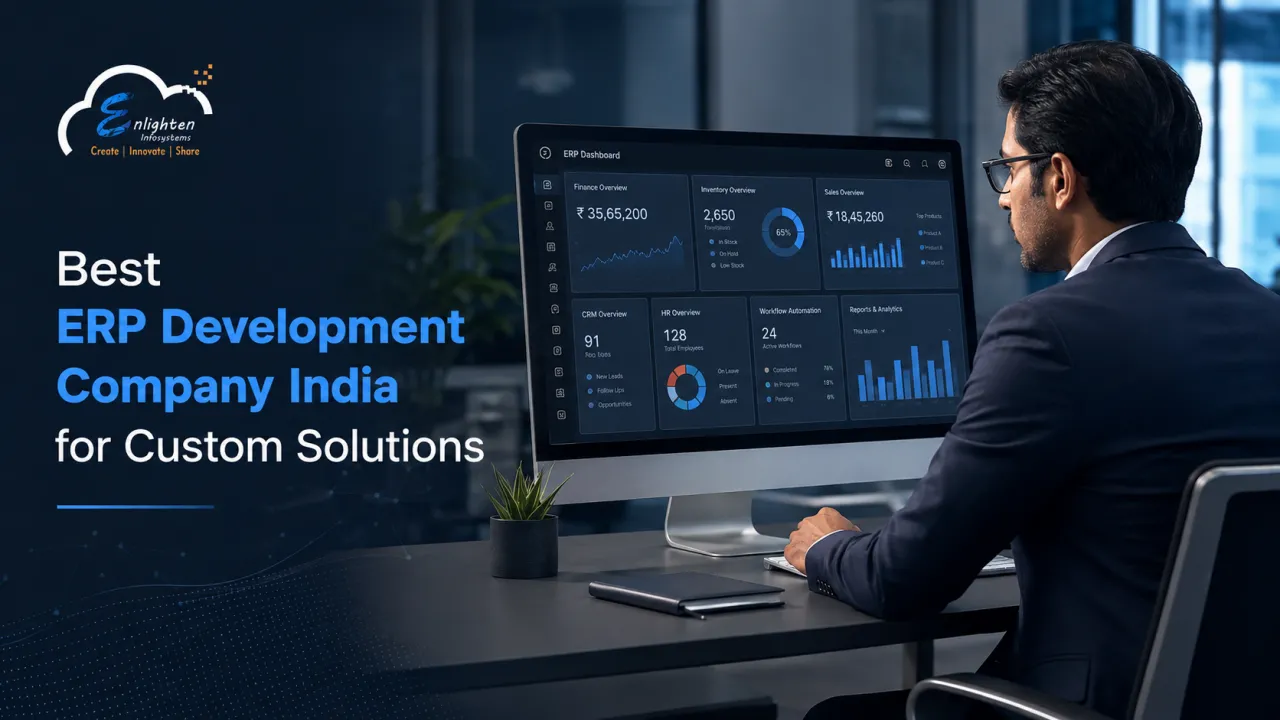
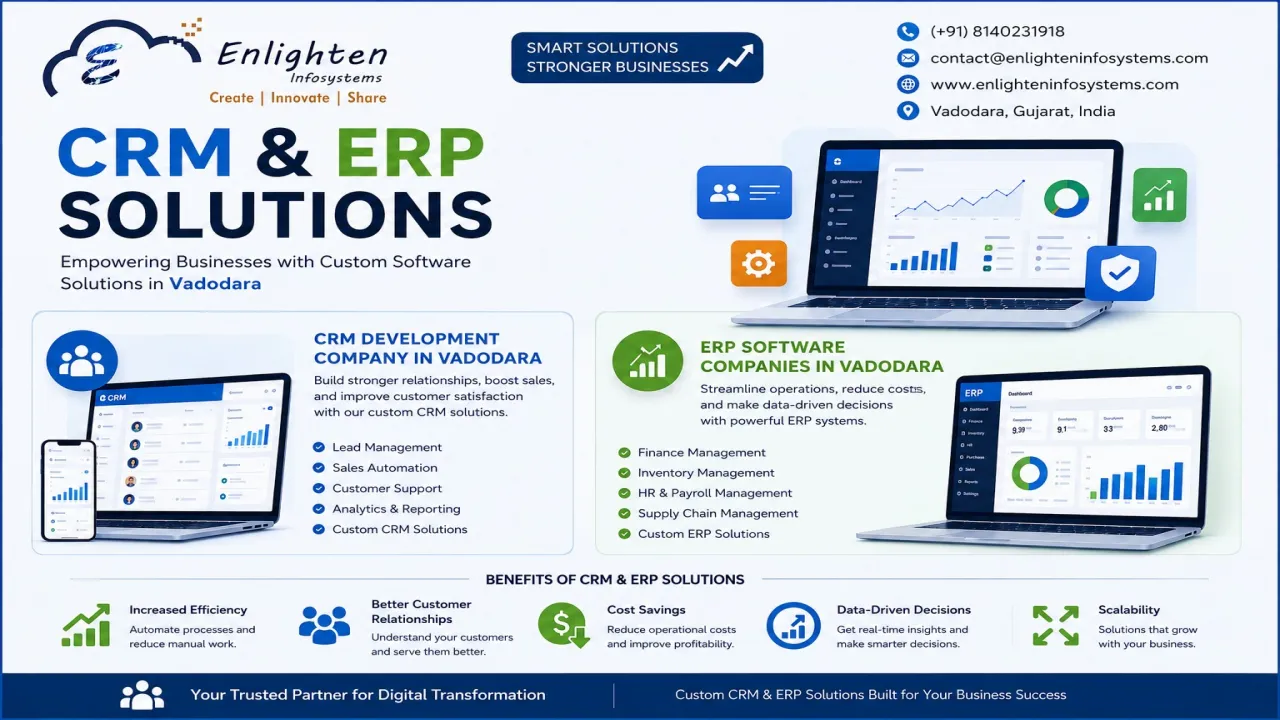
Best ERP Development Company India for Custom SolutionsAs the owner of a business, you are were running multiple things simultaneously. Sales, accounts, stock, employees, customers and daily work also need to be managed. Time-consuming confusion born from trying to find information when each department is using some system of their own.ERP Software Development is where can help. An ERP consolidation of critical business processes within one system. Your team can work on the same information, reduces double data entry and get a better view of what is going on within the business.But every business is different. Even if you have a ready-made ERP it may be equipped with many features, but some of these features may not match the way your company works. If you need custom features, workflows or other needs are not met by off the shelve ERP products, then Custom ERP Solutions that are built around your actual business requirements tend to be less of a burden in the long run.If you are looking for the Best ERP Development Company India, do not look at the price alone. You should also check the company's experience, technical skills, understanding of your business, support services and ability to handle future changes.What Is ERP Software Development?ERP software development is creating software that assists a business in managing multiple departments with a single interconnected system.An ERP imports these functions together instead of wanting separate software for sales, accounting, stock, HR and customers.A custom ERP platform may include:· Sales and order management· Finance and accounting· Inventory and warehouse management· Human resource management· Purchase management· Customer management· Reports and business analytics· Task and workflow automation· User roles and permissionsHow ERP Software Helps Businesses?The top benefit of ERP Software is that relevant business information remains centrally located.The sales team can get customer and order details, while the accounts team gets to see only what they need for billing purposes. Business owners or managers are also able to check reports without requesting files prepared by different teams.ERP software can help with:· Keeping business data in one place· Reducing manual data entry· Improving work between departments· Preparing reports faster· Giving better visibility into daily work· Making regular processes easier to manageKey Features of a Custom ERP SystemA custom ERP system can be built according to the way your business works. You do not have to change every process just because the software does not support it.Depending on the business, an ERP system can include:· Custom dashboards· User-based access· Automated tasks· Stock and inventory tracking· Accounts and finance management· Customer records· Business reports· Notifications· Third-party software integration· Mobile accessThe exact features depend on what the business needs. A good ERP should solve real problems instead of adding features that employees rarely use.Why Choose a Custom ERP Development Company in India?Custom ERP development services are helpful for the business having certain processes that cannot be properly handled by standard software.A company might have its own process for approvals, the way it reports, an internal stock system including inventory log or a workflow involving customer records for example. Custom software can then be built around these needs.Solutions Designed Around Your BusinessEvery business operates differently.A single company can just need a simple sales and stock system, another might need a full database infrastructure covering in-site and on-line sales as well as finance, HR, inventory an many branches.In case of custom ERP development, the software can be developed as per your business process plan. This enables employees to immediately integrate the system into their day-to-day tasks.Better Business Process ManagementAn exemplary ERP connects different steps of a business process.Say that when we create a purchase request it should go to the right person for approval. It can be processed by the purchase team after an approval, stock can lead to update for inventory from the respective product department and whenever there is a payment involves handling this all is accounted at the Accounts Team.The process can be managed through one infrastructure, rather than managing every step separately.Easy Integration with Existing SystemsCompanies have long used distinct software to perform various jobs. Be it an accounting software, payment system, CRM platform, e-commerce tools or HR Software you are working with.Integration of all these systems can be done through an ERP System Integration.So, employees don't have to repeat the same details into different systems. It would save a lot of time and also lower the chances of data entry mistakes.Scalable ERP Solutions for Business GrowthYour business may be small today but can grow over the next few years. Your ERP system should be able to grow with it.A scalable ERP can make it easier to add:· New employees· New departments· New branches· New modules· New software integrations· More reportsPlanning for future growth from the beginning can save time and development costs later.What Services Does an ERP Development Company Provide?An ERP development company can help with more than just writing the software. The right team should understand the business requirement, plan the system, develop it, test it and provide support after launch.Custom ERP Software DevelopmentCustom Telecom Software Development to create a custom ERP system based on business needs. It generally involves business understanding, system planning, screen designing, software development & testing through to production.Before even starting some development work, the development team should understand what your employees really need.ERP Application DevelopmentThrough ERP Application Development, key features of the ERP can be accessed through web or mobile applications.For instance, we can have a manager traveling out of the office that still needs to approve a purchase request or reviewing a business report. If only mobile access could make such things simple.ERP System IntegrationERP System Integration connects the ERP to other software solutions which businesses apply.And this can be payment systems, accounting software, CRM platforms, e-commerce website, HR systems and many more other business applications.The objective is very simple: information should flow between systems without adding more manual work.ERP Maintenance and SupportERP uses require aid even beyond the implementation of the system.The processes within businesses change which might require means for bug fixes, security updates, performance improvements or features or changes.Continuous ERP Maintenance and Support ensures that the software is functional and usable, as time goes by.How to Choose the Best ERP Development Company in India?Choosing an ERP company is an important decision because the software may become a major part of your daily business work.Do not select a company only because it offers the lowest price.Check Industry ExperienceFirstly, verify the experience of the company.Seek experience on projects that span departments, have complicated workflows and include many users in their processes, integrations and business reporting.Inquire about past ERP projects and what challenges the organization was able to address for its clientsReview ERP Development ServicesCheck what services the company actually provides.Good ERP Development Services may include:· Business requirement analysis· ERP planning· UI/UX design· Software development· System integration· Software testing· Deployment· Maintenance and supportHaving these services under one team can make communication easier during the project.Check Technology and Development SkillsThe technology that you use for your ERP should be in alignment with the needs of your business.Make sure the development company is familiar with databases, APIs, cloud platforms, security, web development, mobile applications and other technologies necessary for your project.Consider Support and MaintenanceProbe about post-launch of the ERPYou know how the company deals with technical issues, software updates, security updates, new features and future changes.Having good support can prove quite beneficial when you very soon realize that the ERP is part of your daily business activities.Benefits of Custom ERP Solutions for BusinessesA custom ERP system can make daily business work easier when it is planned properly.Improve Operational EfficiencyMost businesses are repeatedly doing manual work that takes loads of time each day. Some of this work can be offloaded with the help of ERP automation, so employees will have more time to focus on crucial workflows.Manage Business Data in One PlaceAn ERP system integrates the use of important business data in one place instead of keeping it dispersed among different spreadsheets and software. It assists the authorised employees in searching for the information they need.Automate Repetitive Business TasksRegular tasks such as approvals, notifications, invoice processes, stock updates and reports can be automated. This can save employee time and reduce mistakes caused by repeated manual work.Improve Reporting and Decision-MakingBusiness owners need accurate information to make good decisions.When sales, stock, finance and other information is available in one system, it becomes easier to understand business performance and identify areas that need attention.ERP Software Development for Different Business NeedsERP software is not limited to one type of business or department. It can be planned around different business requirements.ERP for Sales and Customer ManagementA sales-focused ERP can help teams manage leads, customers, quotations, orders and follow-ups. It can also work with CRM Solutions India when a business needs more detailed customer and sales management.ERP for Finance and AccountingFinance and accounting modules can help manage invoices, expenses, payments, financial records and business reports.Having this information connected with other departments can make financial management easier.ERP for Inventory ManagementInventory management is important for businesses that deal with products.An ERP system can help track stock, purchases, warehouses, product movement and stock requirements.ERP for HR and Employee ManagementHR modules can help manage employee information, attendance, leave, payroll-related work and other employee records.Keeping this information in one place can make regular HR work easier for the team.Custom ERP Solutions vs Ready-Made ERP SoftwareBoth custom and ready-made ERP software have their own advantages. The right option depends on the business and its requirements.
Factor
Custom ERP Solutions
Ready-Made ERP Software
Flexibility
Highly adaptable
Usually predefined
Business workflows
Built around requirements
May require process changes
Integrations
Can be developed specifically
Depends on available integrations
Scalability
Can be planned around growth
Depends on vendor capabilities
Initial investment
Usually higher
Often lower
Long-term control
Greater control
Vendor dependent
Flexibility and CustomisationCustom ERP software gives you more control over how the system works. You can decide which modules are required, how employees use them, what reports are needed and which other software should be connected.H3: Cost and Long-Term ValueReady-made ERP software can cost less at the beginning. However, you should also consider subscription charges, additional users, customisation, integrations and future upgrades.A custom ERP may require more investment at the start but can provide better value when the business has specific requirements.H3: Scalability and Business GrowthA custom ERP can be planned with future growth in mind.As your business adds employees, branches, products or departments, the system can be updated to support those changes.Why India Is a Preferred Destination for ERP DevelopmentIndia has a large and experienced IT industry, making it a popular choice for software development services.Skilled IT Development ProfessionalsIndia has software developers, designers, testers, project managers and other IT professionals working on projects for businesses in India and other countries.This gives businesses access to teams with experience across different technologies and industries.Cost-Effective ERP DevelopmentERP development in India can be more affordable than development in many other markets.However, businesses should not compare companies only on price. Development quality, experience, support and long-term value are also important.Modern Technology and Development ExpertiseIndian software companies work with modern technologies used for cloud applications, APIs, mobile apps, web platforms, databases, automation and enterprise software.The important part is choosing technology that is suitable for your project rather than using technology simply because it is new.How Much Does ERP Development Cost in India?There is no fixed price for ERP development. The total cost depends on what you want the system to do.Factors Affecting ERP Development CostSome important factors are:· Number of ERP modules· Number of users· Design requirements· Third-party integrations· Technology used· Security requirements· Hosting requirements· Maintenance and supportFeatures and FunctionalitiesA basic ERP with sales, inventory and accounts may cost less than a large ERP with HR, CRM, advanced reports, automation, multiple branches and several integrations.The more features and custom work required, the more development time is usually needed.Development Time and Project ComplexityThe development time depends on the size and complexity of the project. A smaller ERP can be developed faster, while a larger system with many departments and integrations will require more planning, development and testing. It is better to finalise the requirements first and then ask for a project estimate.Why Choose Enlighten Infosystems for ERP Development?Choosing an ERP development company is about more than getting software developed. You need a team that can understand your business and help turn your requirements into a practical system.Enlighten Infosystems works on software solutions based on business requirements rather than using the same approach for every project.Custom ERP Development ServicesIf you are looking for an ERP Development Company India, you can learn more about the ERP Development Company India services offered by Enlighten Infosystems.The focus is on developing ERP solutions around the processes and requirements of the business.Business-Focused ERP SolutionsGood software should make work easier for employees. That is why understanding the current business process is important before starting ERP development. The development team should know what is working, what is causing problems and what the business wants to improve.Reliable Development and SupportERP software becomes part of regular business operations after launch. Because of this, support is just as important as development.Regular maintenance, updates, improvements and technical support can help businesses continue using the ERP as their requirements change.Other IT Services for Growing BusinessesERP is only one part of a company's technology requirements. As a business grows, it may also need mobile applications, websites, web applications and CRM software.Mobile App Development Company VadodaraBusinesses that want to make their services or internal systems available on mobile can work with a Mobile App Development Company Vadodara.A mobile application can be used by customers, employees, sales teams or managers depending on the business requirement.Web Development ServicesProfessional Web Development Services can help businesses create websites and web applications for customers and internal teams.The website should not only look good but should also be easy to use and suitable for the business goals.Website Development SolutionsWebsite Development is important for businesses that want to build a strong online presence.A properly developed website can help businesses present their services, generate enquiries and provide useful information to customers.CRM Software DevelopmentCRM Software Development helps businesses manage customer information, leads, sales activities and follow-ups in an organised way.Custom CRM Solutions can be useful when a standard CRM does not properly match the way a business manages its customers.Businesses and students looking to build their IT skills may also look for an IT Internship Vadodara an IT Training Institute, Software Training Vadodara, or IT Courses Vadodara to gain practical knowledge.Choosing an ERP Development Company in IndiaERP software is more than just another tool in a business’s technology stack. When designed around the right workflows, it can connect key business operations and make every day work easier Enlighten Infosystems develops custom ERP solutions that centralise processes such as finance, HR, inventory, supply chain and CRM. These systems can improve real-time data visibility, automate routine tasks and reduce manual errors and help teams work from one connected platform.The right ERP solution depends on your business needs. While a standard system may work for some companies, businesses with unique workflows may benefit more from Custom ERP Solutions designed around their processes.When choosing an ERP Development Company in India, look beyond pricing. Consider development experience, customisation, integration capabilities, support and the ability to scale the ERP as your business grows. Enlighten Infosystems provides custom ERP development, cloud and SaaS solutions, enterprise integrations, migration, upgrades and ongoing support.The best ERP is not the one with the most features. It is the one that fits your business, simplifies operations and supports long-term growth.