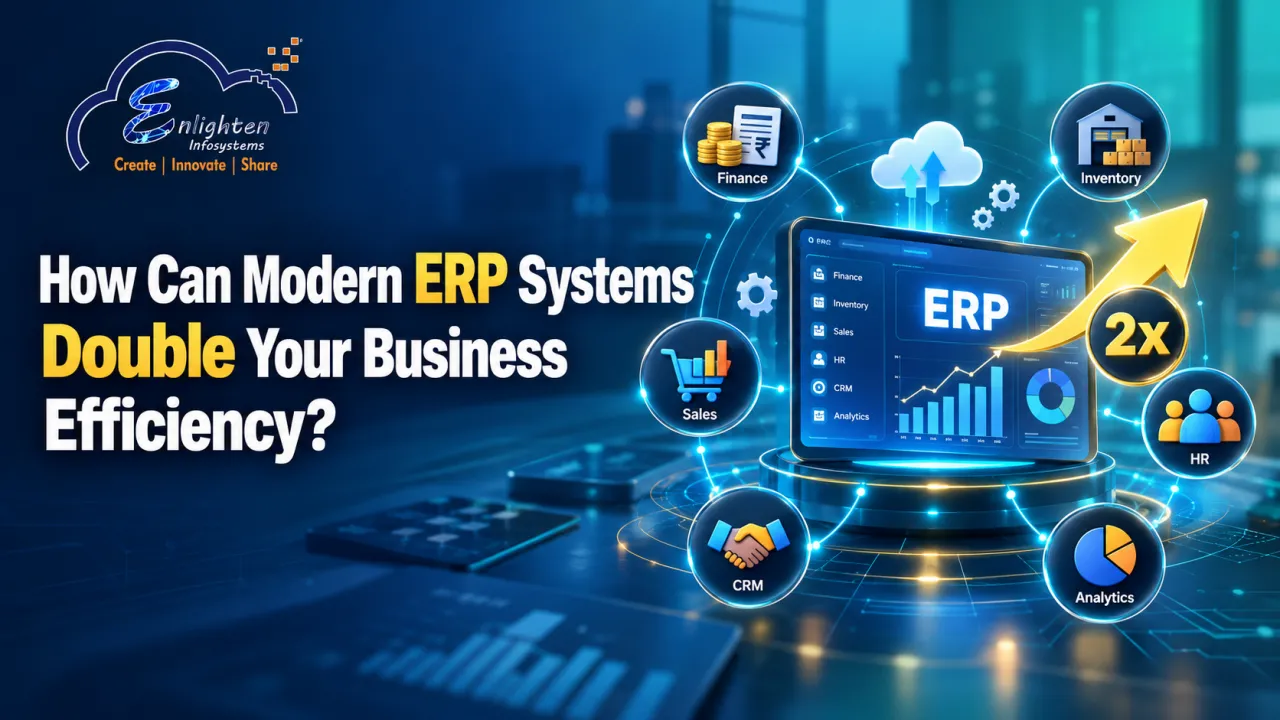
How Can Modern ERP Systems Double Your Business Efficiency?
Running a growing business often means managing many tasks at the same time. Finance teams handle accounts, sales teams manage customers, HR looks after employees, and operations teams track inventory and suppliers. When these activities are managed through separate systems, important information can become difficult to access and easy to miss.
This is where modern ERP software can make a major difference.
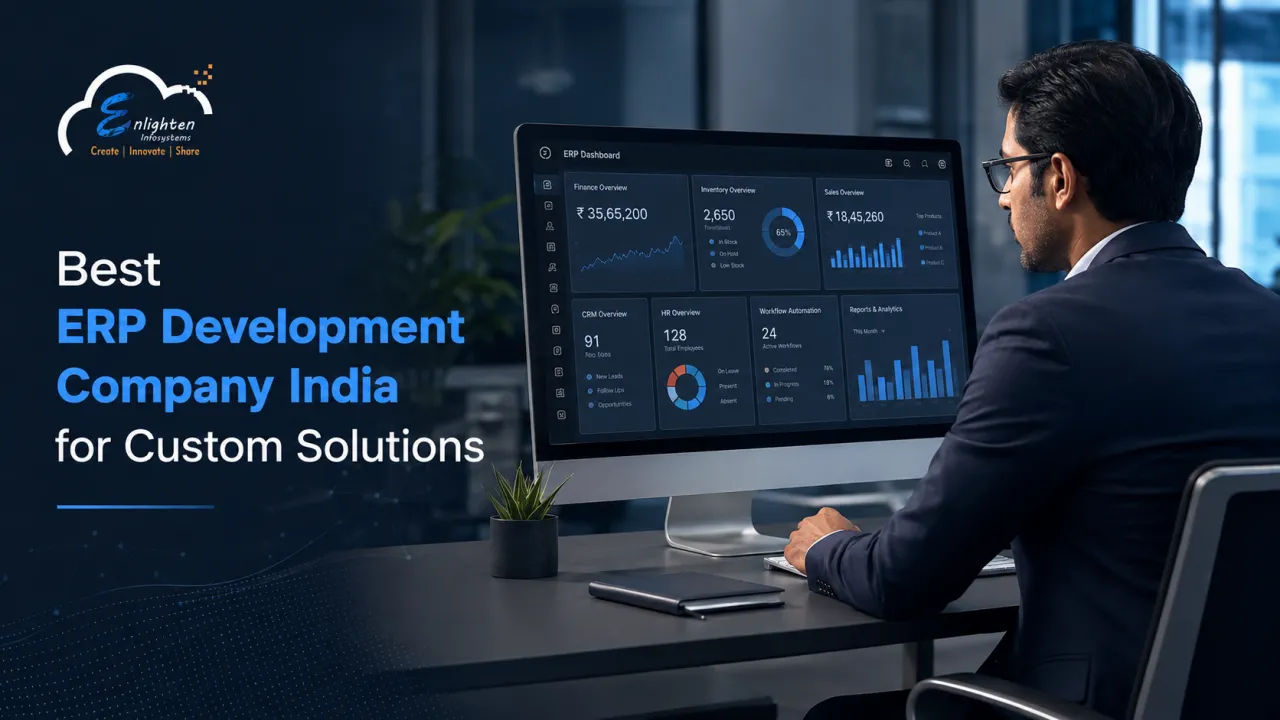
An ERP system integrates core business processes on one unified platform. It helps in the automation of repetitive tasks, offers better data management, lowers mistakes, and gives managers a better perspective on business performance. Proper ERP software development allows businesses to design a system that encompasses their present workflows rather than forcing employees to work in opposition to strict software.
For businesses looking for practical business automation solutions, ERP can become an important part of their digital transformation strategy.
What Is a Modern ERP System?
ERP stands for enterprise resource planning. In simple terms, an ERP system is business management software that connects different areas of a company and allows them to work with shared information.
A modern ERP may bring together:
-
Financial Management
-
Inventory Management
-
Sales Management
-
Human Resources
-
Procurement
-
Supply Chain Management
-
Customer Relationship Management
-
Accounting
-
Business Intelligence
-
Data Analytics
Instead of keeping separate records for each department, an ERP creates a more centralised source of real-time business data.
For example, when a sales order is placed, the relevant information can flow into inventory, finance and delivery processes without employees having to enter the same information multiple times.
Modern cloud ERP systems can also allow authorised employees to access business information from different locations. Cloud computing therefore makes ERP more flexible for businesses with remote teams, multiple offices or changing operational requirements.
How ERP Systems Improve Business Efficiency
The biggest advantage of ERP is not simply having more software. It is about helping people spend less time on repetitive administration and more time on important business activities.
1. Automates Repetitive Business Tasks
Manual data entry can take hours every week. It can also create mistakes that later affect accounting, inventory, or customer records.
Modern ERP Solutions can automate activities such as:
-
Invoice generation
-
Purchase orders
-
Payroll processes
-
Stock updates
-
Sales order processing
-
Approval workflows
-
Financial reporting
-
Employee records
This business process automation reduces unnecessary manual work and allows employees to focus on tasks that require judgement and creativity.
2. Creates One Source of Business Data
Separate spreadsheets and applications within departments can lead to redundant or stale information. This information is connected in one environment through an ERP system. With the same underlying data, finance can see potential sales insights, sales teams can check stock availability, and management can review operational performance.
This improves data management and reduces the confusion caused by multiple versions of the same information.
3. Gives Managers Real-Time Visibility
Business decisions are better when they are based on current information. A modern ERP can provide dashboards and reports covering sales, expenses, inventory, employee activity and other important performance indicators. With real-time business data, managers do not always need to wait for different departments to prepare separate reports. They can identify problems earlier and respond more quickly.
This is also where business intelligence and data analytics can add value. Instead of simply storing information, an ERP can help businesses turn operational data into useful insights.
4. Improves Inventory Management
Inventory problems can directly affect profitability. Too much stock can increase storage costs, while too little stock can result in missed sales and unhappy customers. An ERP can connect purchasing, sales, and inventory management so businesses have a clearer picture of what is available, what has been ordered, and what may need replenishment.
For businesses involved in manufacturing, retail, or distribution, integrating inventory with supply chain management can make daily operations more predictable and efficient.
5. Connects Finance and Accounting
Financial information is at the heart of every business. A modern ERP can bring invoicing, expenses, accounts receivable, accounts payable, budgeting, and reporting into a connected financial management environment. This can reduce duplicate data entry and make it easier to monitor business performance.
When finance information is connected with sales, purchasing, and inventory, management can understand not just how much money the business is making but also where operational costs are coming from.
6. Makes HR Management Easier
Human Resources can involve a large amount of administrative work. HR Management Software within an ERP can help organise employee records, attendance, payroll, leave, and other workforce processes. Connecting HR with the wider ERP system can also improve data consistency and reduce the need to maintain separate employee records across different applications.
Key ERP Features That Help Businesses Grow
Not every ERP solution is the same. Businesses should look for features that match their operational requirements and future plans.
Some important ERP modules include:
-
Financial Management: Helps manage accounting, invoicing, expenses, financial reporting, and other finance-related activities.
-
Inventory and Supply Chain: Provides better visibility over stock, purchasing, suppliers, and movement of goods.
-
Sales Management: Connects sales activities with orders, inventory, and customer information.
-
CRM Integration: CRM integration connects customer and sales information with other business processes. This reduces information gaps between sales, customer service, and operations.
-
HR Management: Supports employee records, payroll, attendance, and other workforce processes.
-
Business Intelligence and Analytics: Dashboards and analytics can convert business information into useful insights for management and planning.
-
API Integration: Businesses often already use CRM platforms, accounting applications or other specialised tools. API Integration allows an ERP to communicate with these systems instead of forcing companies to replace everything at once.
Why Custom ERP Solutions Can Be Better for Growing Businesses
ERP software can work well for businesses with standard processes. However, growing companies may have workflows that are different from those of other organisations. This is where custom ERP software can provide greater flexibility.
With custom ERP development, the system can be designed around the company's specific processes, approval structures, reporting requirements and industry needs.
For example, a business may need a customised combination of inventory, sales, accounting, HR and CRM features. Rather than changing its operations to match generic software, a business can create an ERP solution that matches the way its teams actually work. A strong ERP development company can also build the system in modules, allowing the business to add functionality as it grows. This makes custom ERP particularly useful for businesses that want long-term scalability rather than a short-term software solution.
Businesses with unique workflows often need software that matches their operational requirements. Our guide on ERP Software explains how tailored ERP systems can improve efficiency, simplify operations, and support long-term growth.
How to Choose the Right ERP Development Company
Choosing an ERP partner is an important business decision. The right ERP Software Company should understand both technology and business operations.
Before choosing an ERP development company, consider the following:
Understand Your Business Requirements
Start by identifying the processes you want to improve. Look at areas such as finance, inventory, sales, HR, and procurement.
Check Customisation Capabilities
Ask whether the provider can develop custom software development solutions rather than offering only fixed packages.
Look at Integration Experience
Your ERP may need to connect with CRM platforms, accounting tools, payment systems or other applications. Check the provider's experience with ERP integration and API services.
Consider Cloud and Scalability
A scalable cloud ERP can make it easier to support business growth, remote access and changing operational requirements.
Review Implementation and Support
ERP implementation does not end when the software is installed. Data migration, testing, employee training, deployment, and ongoing support are all important parts of a successful ERP project.
Evaluate Security and Data Management
ERP systems contain sensitive financial, customer, and employee information. Security, access controls, data protection, and reliable infrastructure should therefore be part of the evaluation.
Why Businesses in Vadodara Can Consider Enlighten Infosystems
Choosing the right technology partner can make a major difference to the success of an ERP project.
Enlighten Infosystems is a Vadodara-based IT and Software Development Company offering customised digital solutions, including ERP, CRM and custom software development. The company focuses on building scalable systems around individual business requirements rather than relying only on generic templates. Its ERP services include Custom ERP Development, cloud and SaaS platforms, finance and HR modules, supply chain and inventory solutions, enterprise integrations, migration, and ongoing support.
Enlighten Infosystems also highlights ERP capabilities such as real-time analytics, business process automation, CRM integration, and API connectivity. Its development approach covers consulting, architecture, core development, quality testing, deployment, and post-launch support. For businesses comparing ERP software companies in Vadodara, these capabilities can be useful when looking for a technology partner that can support both current operational needs and future growth.
The company also provides digital transformation services and customised enterprise software, making ERP part of a broader technology strategy rather than an isolated software project.