Full Stack Developer Career Roadmap: From Student to Professional
Start Your Journey as a Full Stack Developer
A Full Stack Developer Career is a great choice for students who enjoy technology and want to build websites and applications. A full stack developer works on both the front side and back side of a website. This means they create what users see and also manage the work happening behind the scenes.
To become a successful full stack developer, students need to learn the right skills step by step and gain practical experience.
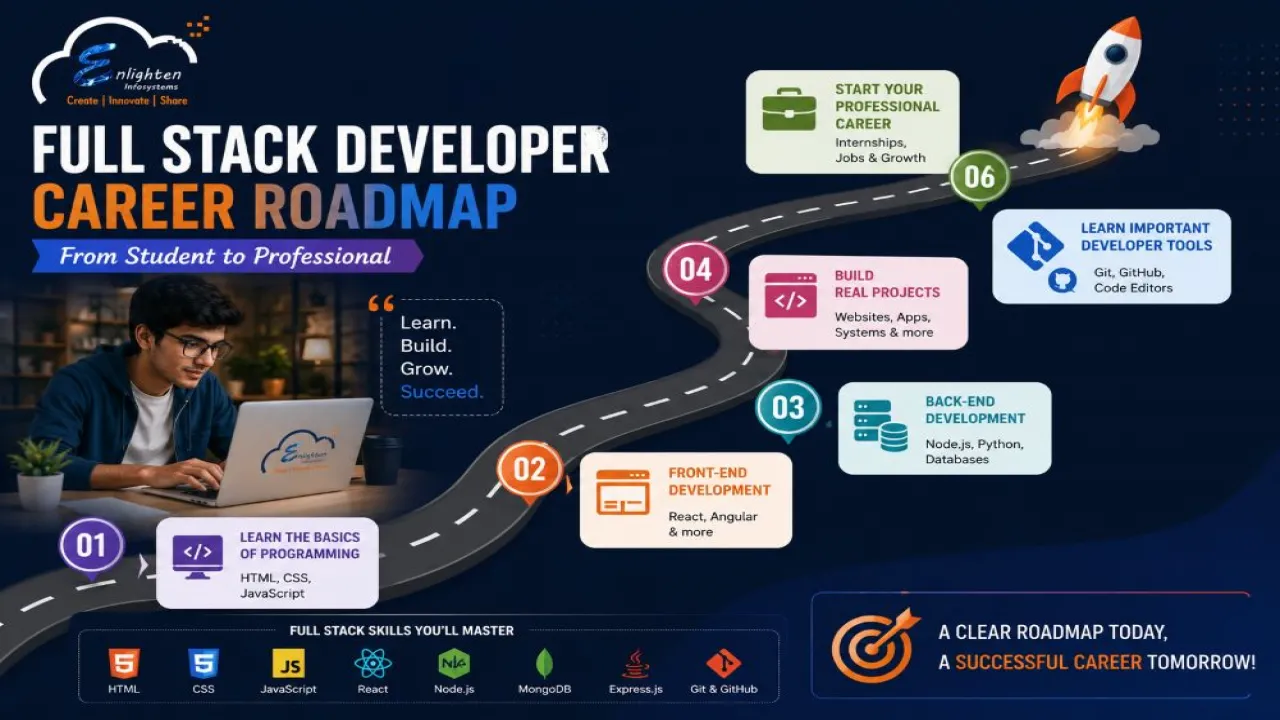
Step 1: Learn the Basics of Programming
The first step in a full stack developer journey is learning programming basics. Students should start with languages like HTML, CSS and JavaScript. These are the building blocks used to create websites.
HTML helps create the structure of a webpage, CSS makes it look attractive and JavaScript adds actions and features to the website.
Having strong basics makes it easier to learn advanced topics later.
Step 2: Understand Front-End Development
Front-end development focuses on the part of a website that users interact with. A full stack developer should learn how to create simple, fast and user-friendly websites.
Students can learn tools and technologies like React, Angular, or other popular frameworks. They should also practice creating small projects like websites, forms and interactive pages.
Step 3: Learn Back-End Development
Back-end development manages the hidden part of websites, such as storing information and handling user requests.
Students should learn programming languages and technologies like Node.js, Python, Java, or PHP. They should also understand databases like MySQL or MongoDB to store and manage data.
Step 4: Build Real Projects
Practical experience is very important for a full stack developer career. Students should create real projects to improve their skills and confidence.
Examples of projects include:
-
Online shopping websites
-
Student management systems
-
Blog websites
-
Business websites
Building projects helps students understand how real websites work.
Step 5: Learn Important Developer Tools
A professional developer should know basic tools used in companies. Learning tools like Git, GitHub and code editors help web developers manage their work and collaborate with teams.
Step 6: Start Your Professional Career
After learning skills and building projects, students can apply for internships and entry-level jobs. An IT Internship Program can help students gain industry experience and understand professional work.
With continuous learning and practice, students can grow from beginners to professional full stack developers.
A clear learning plan, regular practice and real project experience can help students build a successful Full Stack Developer Career.