
Master the CRM Process: 5 Proven Steps to Build Stronger Customer Relationships

When I talk to business owners, one problem comes up again and again. They say they are getting enquiries, but they are not able to manage customer relationships properly. Messages come from Email, phone calls and social media and somewhere along the way important details get lost.
This is where Customer relationship management becomes important. Businesses today use CRM technology to keep all customer information in one place and track customer interactions from the first enquiry to after sales support. Companies that want better customer satisfaction often work with a professional CRM development company in Vadodara that can build the right system for their needs.
In simple words, CRM helps a company understand the customer journey, improve communication and turn a potential customer into a loyal customer.
What Is CRM as a Process?
Many people think CRM is just CRM software. But it is much more than that.
CRM is actually a business process used for managing customers, tracking their behaviour and improving the overall customer experience.
It involves collecting data, understanding consumer behaviour and using that information to create better marketing strategies and stronger relationships with customers.
A good CRM process also helps businesses improve operational efficiency because all customer interactions and tasks follow a structured workflow.
What Is the Customer Relationship Management Process?
The customer relationship management process is the way a business tracks and manages the full customer lifecycle.
It starts when a new customer first contacts the company and continues even after they buy a product or service.
This process helps a company:
- understand customer needs
- improve customer engagement
- organise sales and marketing
- increase customer acquisition
- build long-term customer loyalty
In short, it helps businesses manage customer relationships in a better and more organised way.
What Are the 5 Steps in the CRM Process?
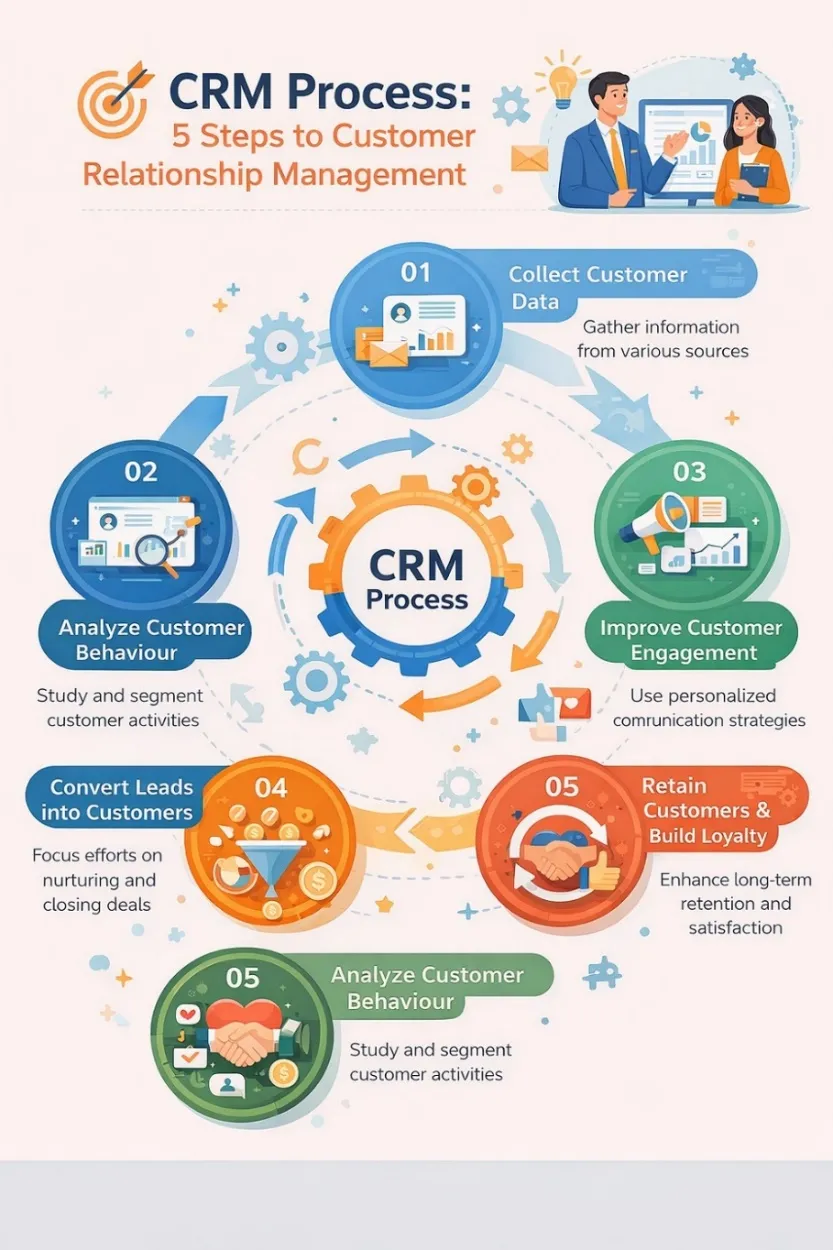
The CRM process follows several key steps that help businesses organise their sales process and improve customer relationships.
These key steps guide how companies collect data, communicate with customers and build long-term loyalty.
Step 1: Collect Customer Data
The first step is collecting customer information.
Businesses gather data from many sources:
- website forms
- Email marketing sign-ups
- social media messages
- online chat enquiries
All this data is stored inside a CRM tool or CRM technology platform. The goal is simple: understand who the target audience is and what they are looking for.
This step also involves proper data entry and strong data management so information is accurate and easy to find later.
Step 2: Analyse Customer Behaviour
Once the information is collected, businesses study it using analytics and machine learning tools.
This helps companies understand consumer behaviour and patterns such as:
- which products customers like
- how often they purchase
- how they respond to marketing campaign messages
With this knowledge, companies can design better marketing strategies and improve the sales process.
Step 3: Improve Customer Engagement
After analysing the data, the next step is improving customer engagement.
Businesses communicate with customers through:
- Email marketing
- social media
- online chat
- follow-up calls
These actions help businesses create targeted marketing and personalised messages.
For example, instead of sending the same offer to everyone, a company can send targeted marketing emails to people who showed interest in a specific service.
This improves customer satisfaction and builds trust with the brand.
Step 4: Convert Leads into Customers
The next step is converting leads into buyers.
During this stage, businesses focus on lead management and proper on boarding.
The goal is to turn a potential customer into a new customer through strong communication and helpful support.
Good CRM automation tools can remind sales teams to follow up, schedule calls and track conversations.
This helps the company move leads smoothly through the CRM cycle.
Step 5: Retain Customers and Build Loyalty
Getting a sale is not the end of the process.
Smart companies focus on customer retention and long-term retention.
They keep engaging with an existing customer through updates, offers and support. When customers feel valued, they become a loyal customer and sometimes even recommend the brand to others.
This increases customer lifetime value and creates strong brand loyalty.
How CRM Process Works in Real Businesses

Let me share a simple example.
One small company in Vadodara providing IT Services in Vadodara was struggling to track enquiries coming from their website and social media.
Before CRM, they used spreadsheets. Many customer interactions were missed and some new customer enquiries never received a reply.
After implementing a CRM system with marketing automation, they could see all leads on one dashboard (computing). They started sending email marketing follow-ups and tracking the customer journey.
Within a few months, they improved customer retention and many clients became a loyal customer who continued working with them.
What Are Common CRM Processes?
Some common CRM processes include:
- lead management
- data management
- customer communication tracking
- marketing automation
- customer support management
- A/B testing for campaigns
These processes help companies maintain visibility across all customer activities.
What Are the 4 Types of CRM Systems?
Most businesses use four main CRM systems:
- Operational CRM - helps automate daily tasks and workflows
- Analytical CRM - focuses on analytics and predictive analytics
- Collaborative CRM - improves communication between departments
- Strategic CRM - supports long-term strategic planning
These systems often use artificial intelligence and machine learning to improve results.
What Are the Stages of CRM?
The main stages of CRM include:
- Customer acquisition
- Customer engagement
- Sales conversion
- Customer support
- customer retention
These stages together form the CRM cycle that businesses repeat continuously.
How to Implement a CRM Process?
To implement a CRM process successfully, businesses should follow these steps:
- choose the right software and technology
- define clear marketing strategies
- train the team through proper education
- connect CRM with tools like Slack (software) and Zapier
- ensure compliance with rules such as General Data Protection Regulation
Sometimes companies also integrate CRM with enterprise resource planning systems to improve operations.
What Are the Benefits of the CRM Process?
A well-structured CRM process helps businesses:
- improve customer experience
- increase customer loyalty
- build strong brand reputation
- improve operational efficiency
- track performance indicators
- support better decision-making
It also helps businesses manage both a new customer and an existing customer more effectively.
Is CRM a Business Process?
Yes, CRM is a structured business process.
It combines technology, data and strategy to help companies build better relationships with customers.
When used properly, CRM improves customer engagement, strengthens the brand and supports long-term business growth.
What Is the CRM Process Cycle?
The CRM cycle is the ongoing process of attracting, converting and keeping customers.
This CRM cycle includes:
- lead generation
- sales conversion
- customer support
- retention
When businesses repeat this CRM cycle, they continue building trust and stronger relationships with customers.